Array
Aquilegia chaplinei
(Chapline's columbine)
[taxon report][distribution map][photos][line drawing]
Family: Ranunculaceae
Scientific Name: Aquilegia chaplinei Standley ex Payson
Synonyms: Aquilegia chrysantha A. Gray var. chaplinei (Payson) E.J. Lott
Vernacular Name: Chapline's columbine
R-E-D Code: 2-1-2
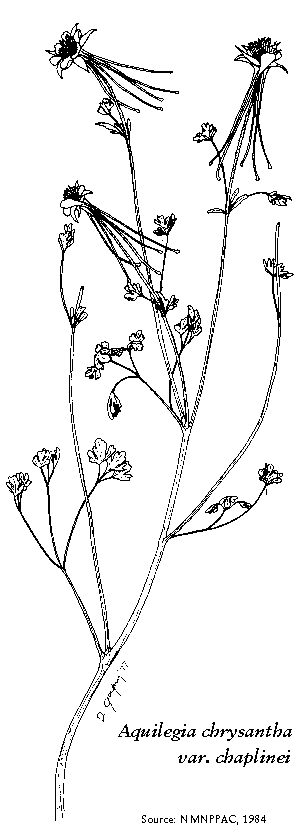
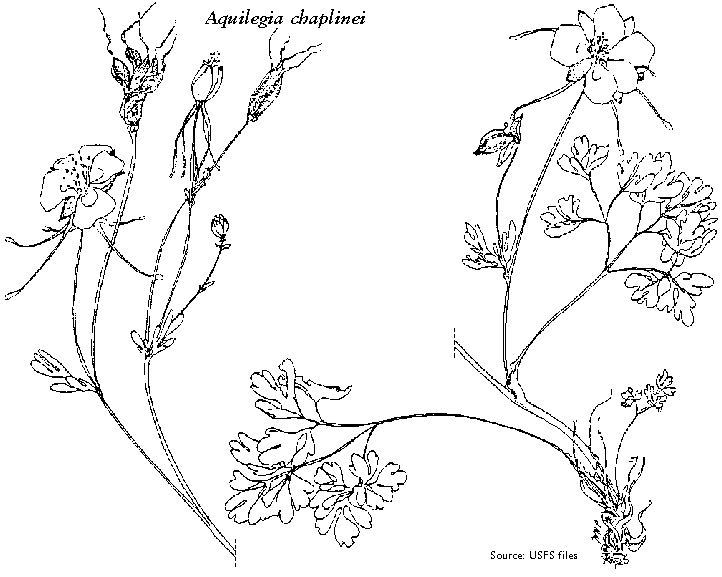
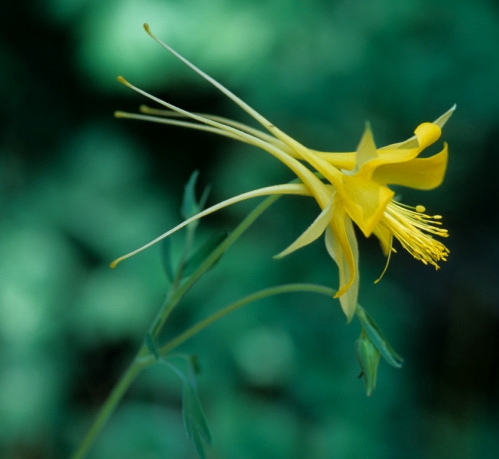
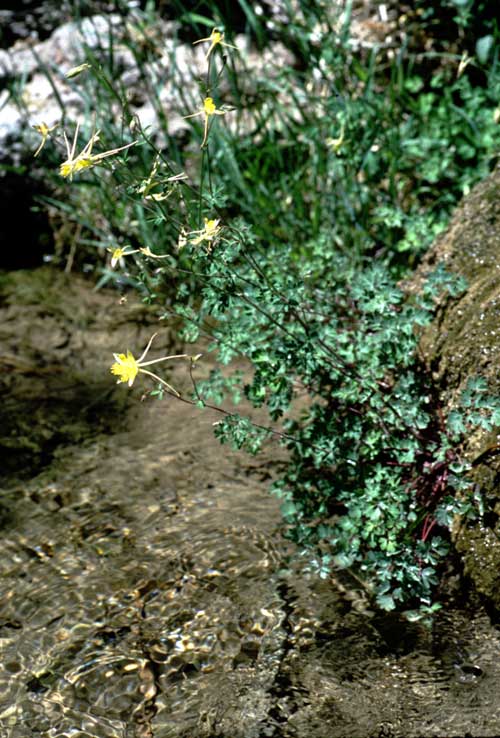
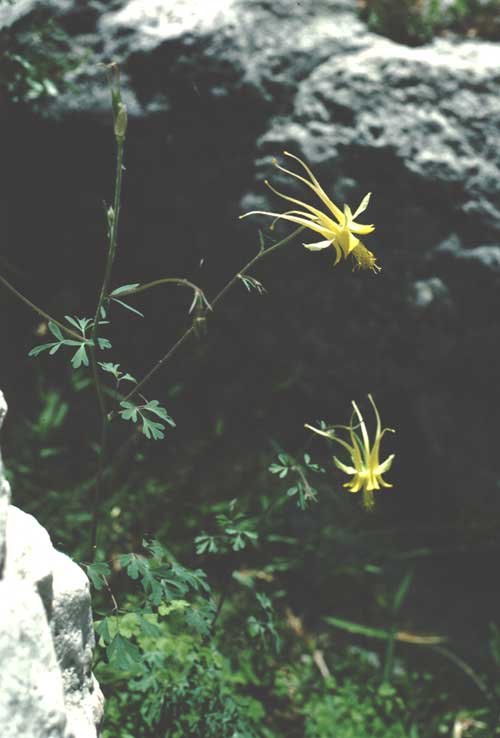
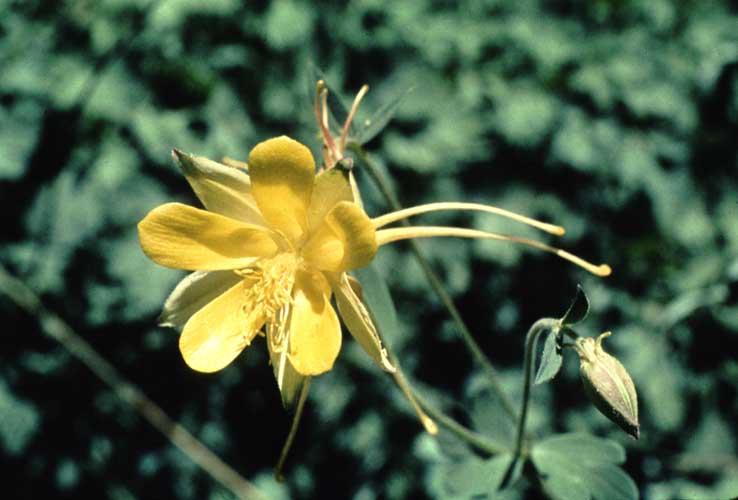
Description: Perennial herb; stems 2-5 dm long, glabrous except for the glandular-pubescent upper parts, openly branched; basal leaves biternately to triternately divided into 3 or 6 leaflets, leaflets lobed, glabrous, dark green above, somewhat paler beneath; petioles slender, glabrous, 5-12 cm long; stem leaves several, gradually reduced upward; flowers suberect, pale-yellow, somewhat pubescent; sepals petal-like, broadly lanceolate 13-16 mm long, 4-6 mm wide; petal blade shorter than the sepals, petal base prolonged backwards into a slender spur 3-4 cm long, about 4 mm wide at base; stamens exceeding petal blades by almost 1 cm; follicles 18-22 mm long; seeds almost 2 mm long. Flowers April to October.
Similar Species: Aquilegia chrysantha has spurs that are greater than 4 cm long.
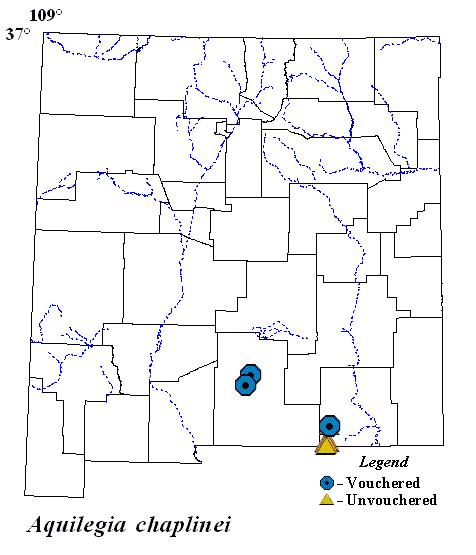
Distribution: New Mexico, Eddy and Otero counties, Guadalupe and southern Sacramento mountains; adjacent Texas.
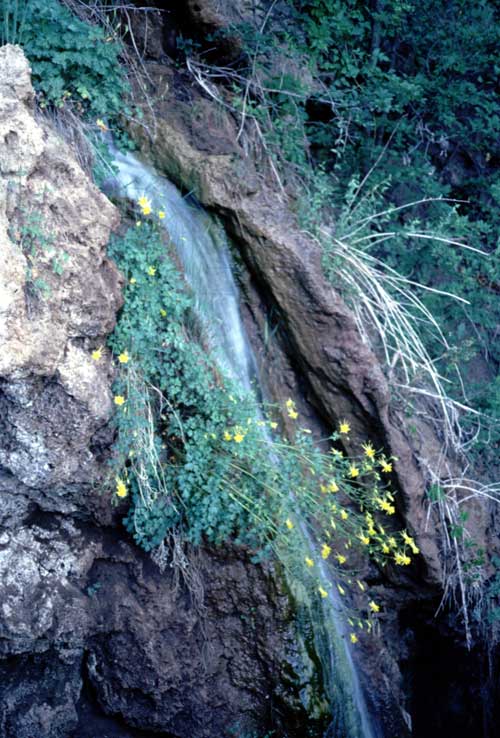
Habitat: Limestone seeps and springs in the montane scrub or riparian canyon bottoms at 1,400-1,700 m (4,700-5,500 ft).
Remarks: None
Conservation Considerations: Since this species is mostly found in remote canyons, it is well protected from most human impacts. The Sitting Bull Falls population is easily accessible and slightly impacted by recreational activities. Populations on the western slope of the Sacramento Mountains are vulnerable to habitat loss from diversion of water for municipal uses.
Important Literature (*Illustration):
Flora of North America Editorial Committee. 1997. Flora of North America, volume 3. Oxford University Press, New York.
New Mexico Native Plants Protection Advisory Committee. 1984. A handbook of rare and endemic plants of New Mexico. University of New Mexico Press, Albuquerque. (Illustration is not A. chaplinei.)
*Warnock, B.H. 1974. Wildflowers of the Guadalupe Mountains and the Sand Dune Country, Texas. Sul Ross University, Alpine, Texas.
Information Compiled By: Ken Heil, Joey Herring, 1999; last updated 2007
Agency Status: