How it Works:
To become a volunteer, you must meet the basic requirements:
Be familiar with botanical terms and the process to identify plants – or be willing to learn.
Be able and willing to follow survey protocols.
Be able and willing to work independently outside.
Attend the online two-part training.
Sign the data confidentiality agreement to not share rare plant data.
Once you have taken the training, visit the NM Rare Plant Finder Map to select an assignment. The assignment must fit with the volunteer's skills in identifying plants, where they are willing to travel to, and at a time when the plant is readily identifiable, such as when it’s in bloom.
Next, a coordinator verifies the assignment and provides more information to the volunteer, including historic observation data, maps, and forms.
The volunteer then plans the visit, and prepares for how to identify the plant, and how to access their assignment.
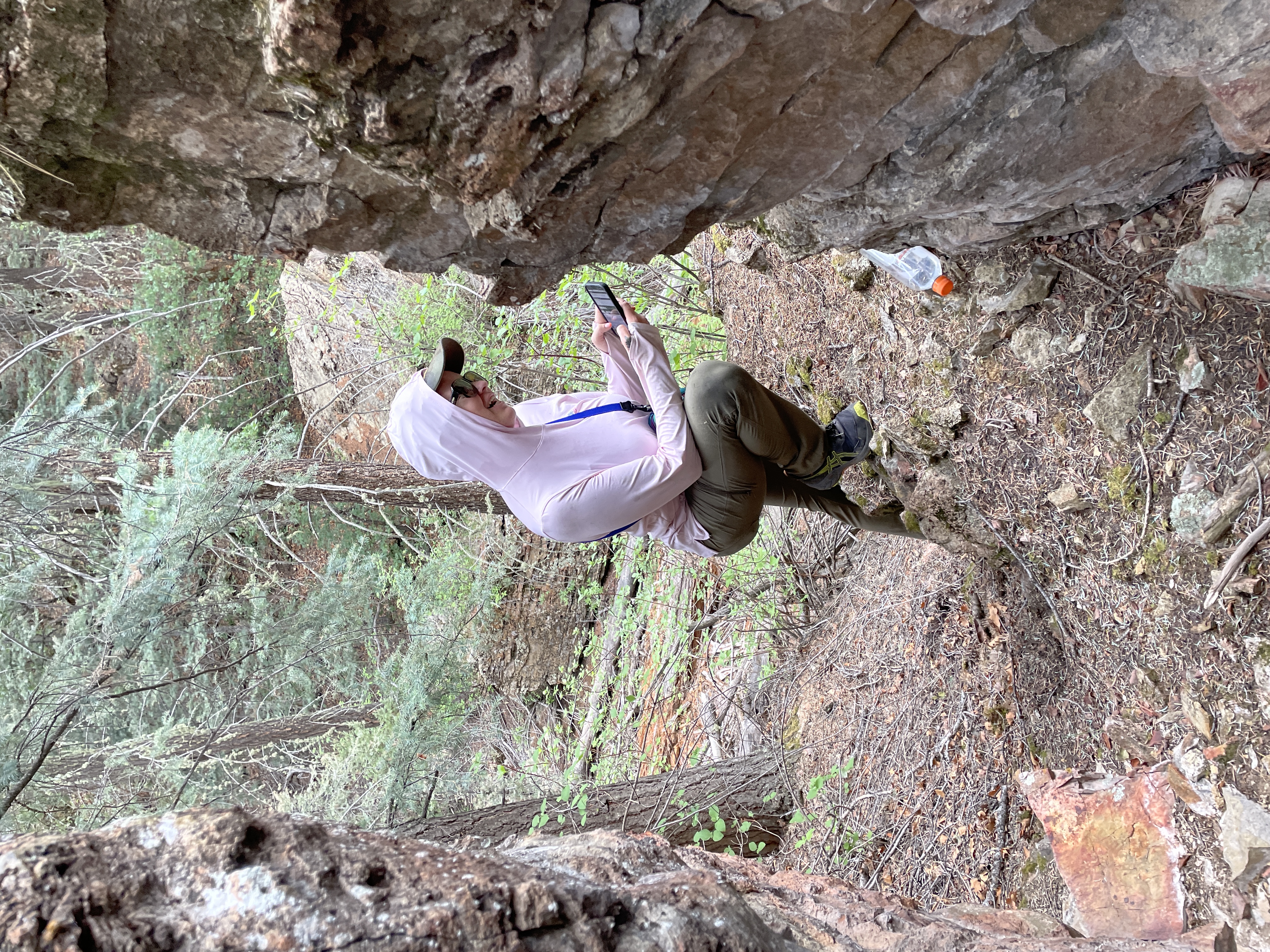
Once in the field, the volunteer searches for the plant and, hopefully if found, they will take several identifying photos to verify the plant, collect data with Survey123 on a smartphone or on paper (submitted via a desktop computer once back at home).
If the plant is not found, then volunteers will be required to document its absence and record in Survey123 where they searched for the plant.
Survey data is then submitted where it is then reviewed and verified by program staff. The information is sent to Natural Heritage New Mexico to update their database records and subsequently made available to resource managers, federal agencies, private industry, and the public to support and promote informed stewardship of New Mexico's natural resources.
SIGN UP HERE!
Expectations
Represent the Rare Plant Watch program and conduct work in a professional manner.
Be at least 18 years or older, however, younger adults may accompany an adult if listed on the application.
Keep all information on the exact location of rare plant populations confidential. You will be required to sign a Data Confidentiality Agreement.
Minimize your impacts to rare plant populations by removing any potential invasive weedy plant materials (e.g., seeds) from your clothing and shoes prior to every site visit.
Never collect rare plants during assignments (e.g., entire plants or portions thereof) or materials (e.g., seeds or flowers) unless you are explicitly instructed to do so by program staff. We expect identification to be determined in the field or through diagnostic photographs verified by staff at a later time. If needed, program staff will visit the population to verify.
Qualifications
A commitment to and an interest in plant conservation and stewardship
Ability to identify native plants in the wild and to distinguish rare plants from other co-occurring species. Additional, formal training in plant identification is a plus, but not required.
Ability to work independently in uneven terrain and varying weather conditions
Your own transportation
Good observation skills and attention to detail.
Ability to collect scientific data and organize it for efficient reporting
Good navigation skills (rare plants are typically not near a hiking trail!)
Reliability, commitment, and promptness in submitting data