
Astragalus cliffordii (Clifford's Milkvetch)
NONE
| USFWS | State of NM | USFS | BLM | Navajo Nation | State Rank | Global Rank | NMRPTC Status |
|---|---|---|---|---|---|---|---|
| S2 | GNR | R |
| Overall Conservation Status | Documented Threats | Actions Needed |
|---|---|---|
| UNDER CONSERVED | No Information |
Status surveys on abundance, distribution and threats |
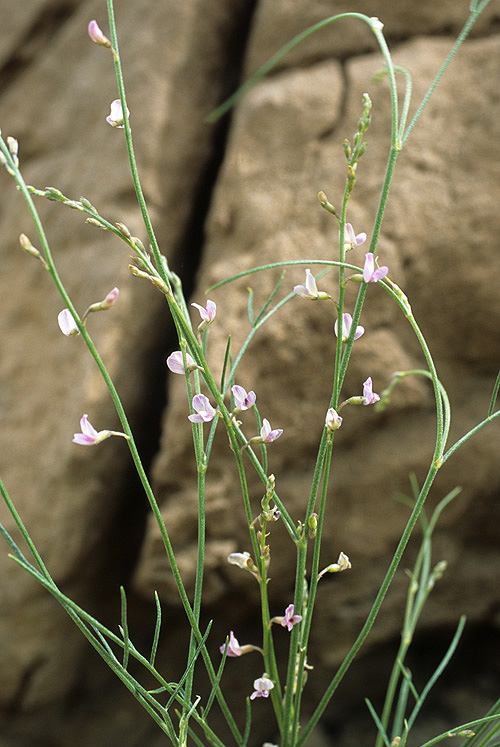
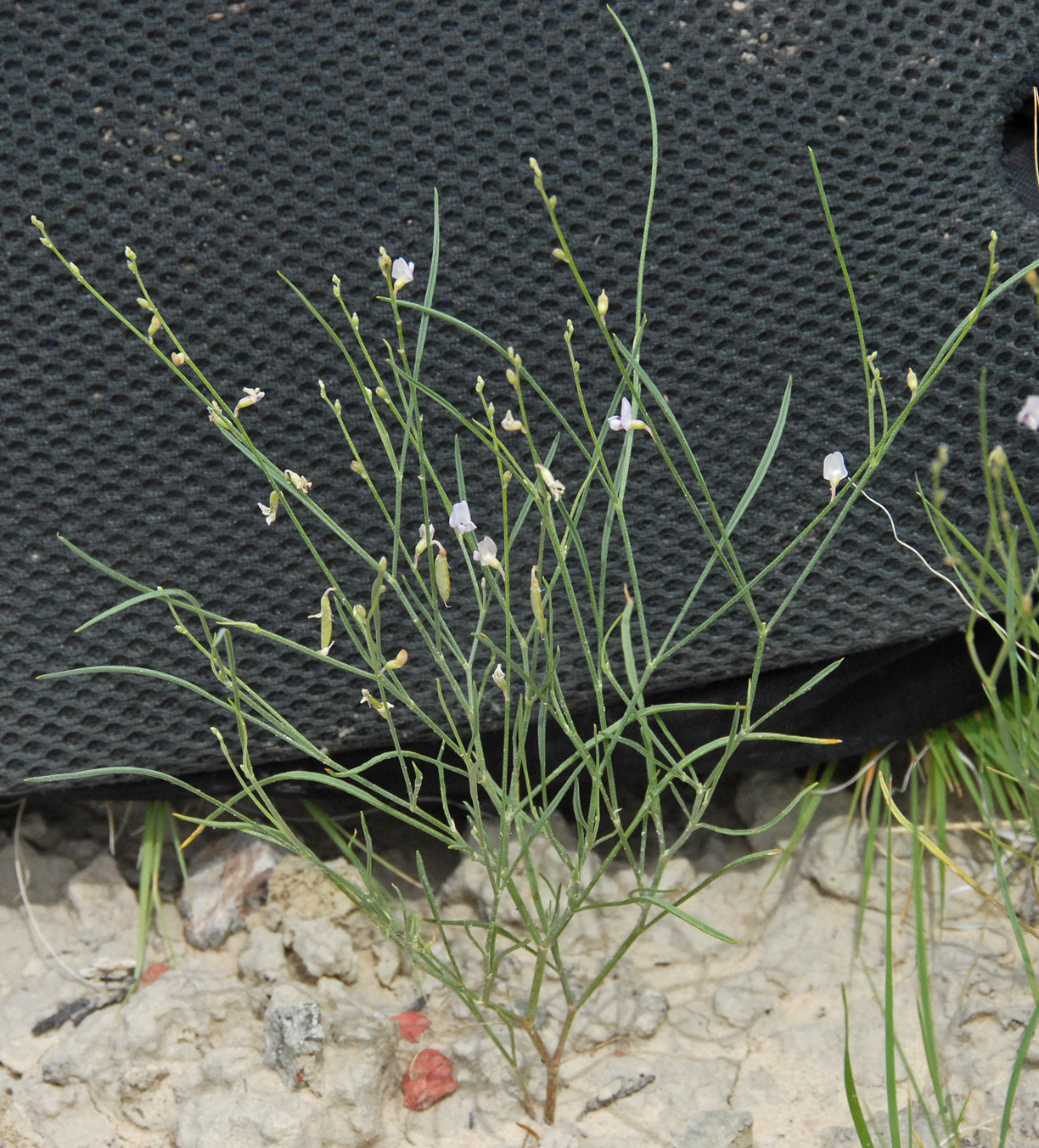
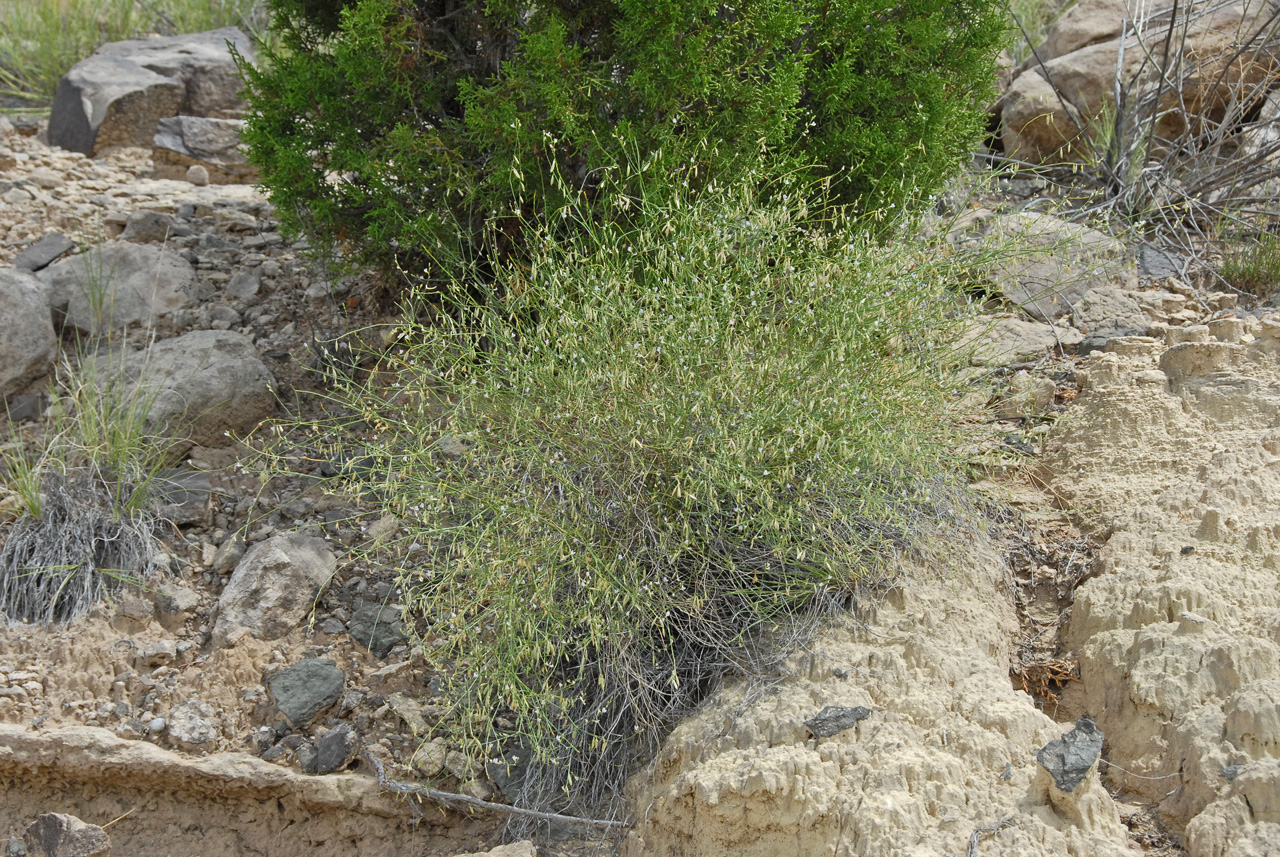
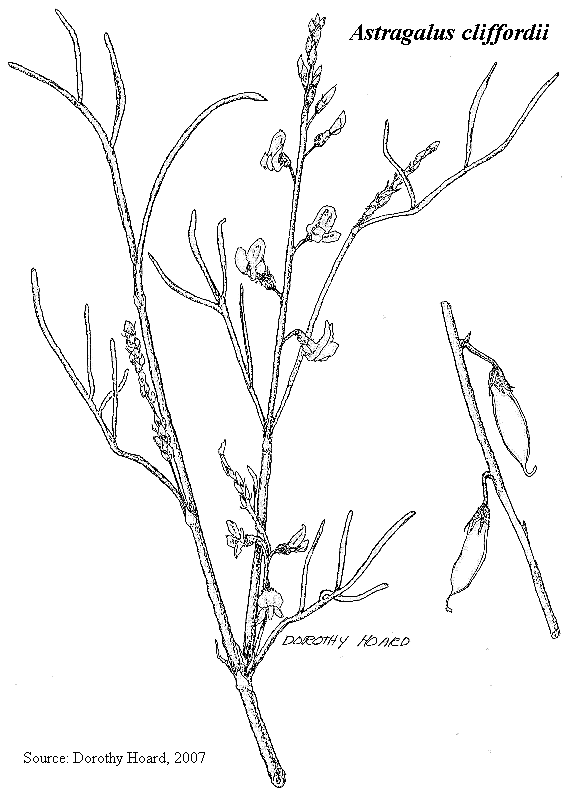
Caulescent perennial, 3.5-6.5 dm tall; basifixed pubescent; stems buried for 1-6 cm, erect-ascending, forming diffuse clumps; stipules 1.5-4.5 mm long, some connate-sheathing; leaves 3.5-6.5 cm long; leaflets 5-7 (9), linear, acute, strigose, 8-28 mm long, 0.4-1 mm wide; peduncles 1.2-12 cm long, racemes loosely 5-19 flowered, ascending; flowers pea-like; calyx 1.8-3 mm long, the tube 1.2-1.8 mm long; petals pale, faintly suffused with purple, 4.3-6.1 mm long; pods declined, 9-12 mm long, the body elliptic to oblong, straight or slightly curved, subinflated, 9-9.8 mm long, 2.5-3 mm wide, compressed, glabrous, unilocular; ovules 4 or 5. Flowers mid May to June.
Astragalus cliffordii can be distinguished from A. wingatanus by the presence of its filiform peduncles and rachis, confluent terminal leaflet, and the tiny pale flowers with lilac penciled lines on the banner.
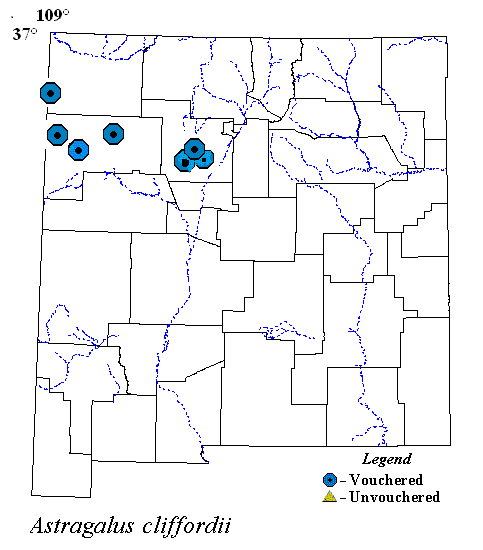
New Mexico: McKinley, Sandoval, San Juan counties. Arizona: Navajo County.
Rim rock ledges of the Mesa Verde Group, in sagebrush and pinyon-juniper woodland; 2,070 m (6,800 ft).
Astragalus cliffordii is named for Navajo botanist Arnold Clifford.
An inventory of potential habitat in New Mexico is needed to determine its abundance and distribution and whether current land uses pose a threat to this plant.
Welsh, S.L., N.D. Atwood, S. Goodrich and L.C. Higgins. 2003. A Utah Flora, 3rd ed. Monte L. Bean Life Science Museum, Brigham Young University, Provo, Utah.
For distribution maps and more information, visit Natural Heritage New Mexico