


Hedeoma todsenii (Todsen's Pennyroyal)
NONE
| USFWS | State of NM | USFS | BLM | Navajo Nation | State Rank | Global Rank | NMRPTC Status |
|---|---|---|---|---|---|---|---|
| LE | E | S2 | G2 | R |
| Overall Conservation Status | Documented Threats | Actions Needed |
|---|---|---|
| WEAKLY CONSERVED | Small population size, wildfire, grazing, low reproduction rates, mineral exploration. |
Study impacts of fire and erosion. Thinning of pinon-juniper by hand to reduce fuels. Develop ex-situ propagation methods and cryopreservation as insurance. Study pollinators. Monitor population trends. Study reproduction. |
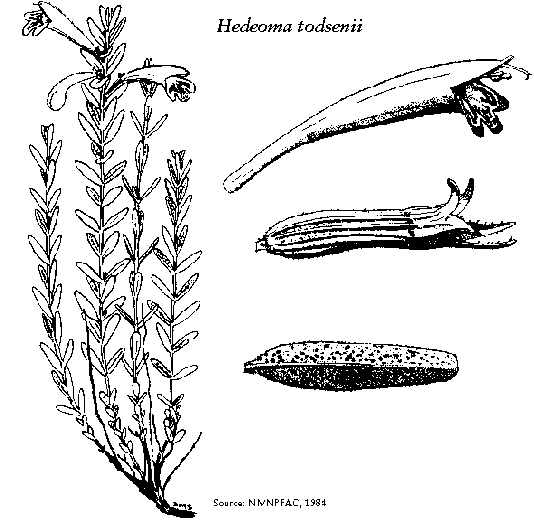
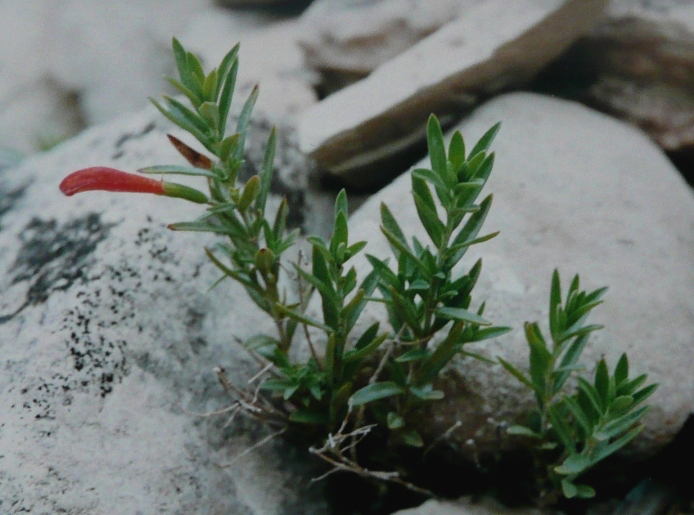
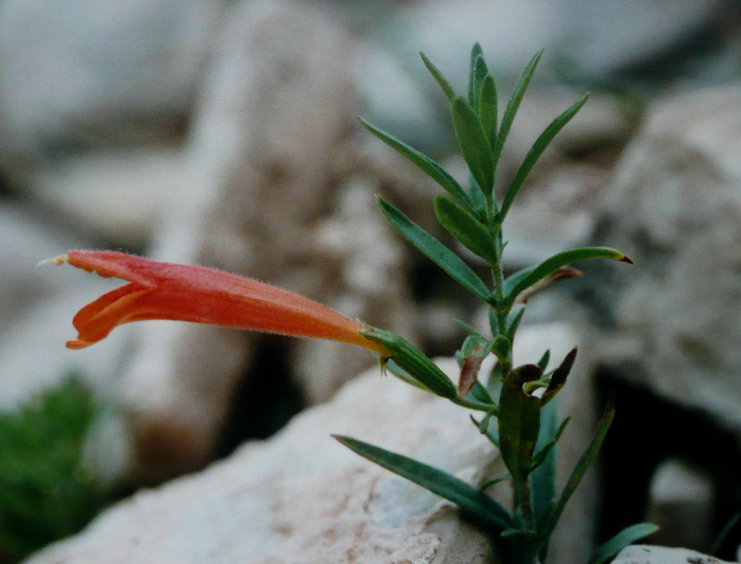
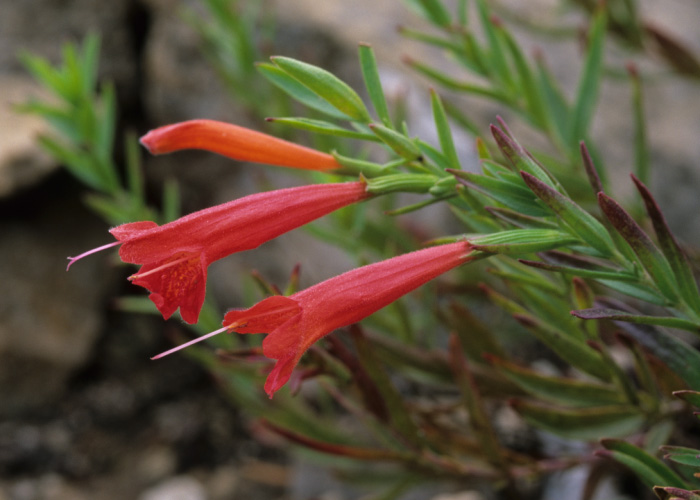
Rhizomatous, perennial herb, the rhizomes slender and unbranched; stems several, unbranched, clustered, somewhat woody at the base, 10-20 cm tall; leaves opposite, 8-15 mm long, 2.5-5.0 mm wide, sessile, oblong-lanceolate, tip rounded to acute, margins entire, lower surface glandular-dotted; flowers one to a few per stem, arising from the upper leaf axils; calyx 13 mm long, tubular, bilabiate, the teeth narrowly acute; corolla up to 3.6 cm long, tubular, bilabiate, red-orange to rarely yellow, red markings on the inner lip; fertile stamens 2; fruit of 4 nutlets with usually only 1 or 2 developing to maturity. Flowers July to September.
None
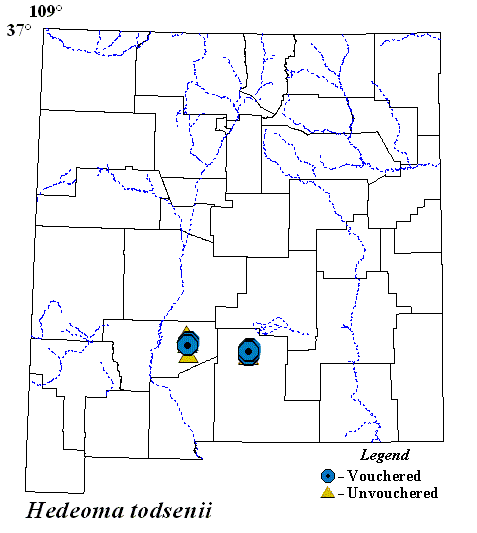
New Mexico, Sierra and Otero counties, in the San Andres Mountains and on the western slope of the Sacramento Mountains.
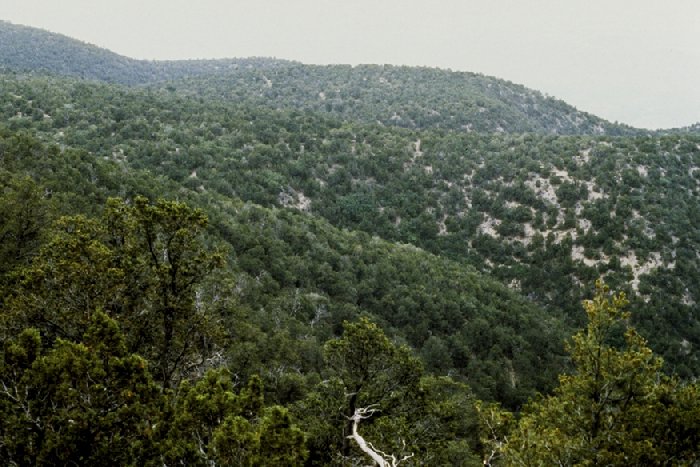
Plants grow in loose, gypseous-limestone soils associated with or positioned immediately below the Permian Yeso Formation; usually on steep north or east-facing slopes in piñon-juniper woodland; 1,900-2,300 m (6,200-7,400 ft).
Reproduction appears to be almost completely vegetative; flowering, seed set, and seed viability are all low. This species was discovered in the late 1970s in the San Andres Mountains where it is now known from 14 sites; later it was found at 15 sites on Domingo and Mountain Lion peaks in the Sacramento Mountains.
There are few human activities in the areas where this plant occurs, but events such as erosion or fire could affect populations. Problems of reproduction make re-establishment problematic.
*Irving, R.S. 1979. Hedeoma todsenii (Labiatae), a new and rare species from New Mexico. Madroño 26:184-187.
*New Mexico Native Plants Protection Advisory Committee. 1984. A handbook of rare and endemic plants of New Mexico. University of New Mexico Press, Albuquerque.
*U.S. Fish and Wildlife Service. 2001. Todsen's pennyroyal (Hedeoma todsenii R.S. Irving) revised recovery plan. U.S. Fish and Wildlife Service, New Mexico Ecological Services Field Office, Albuquerque.
For distribution maps and more information, visit Natural Heritage New Mexico